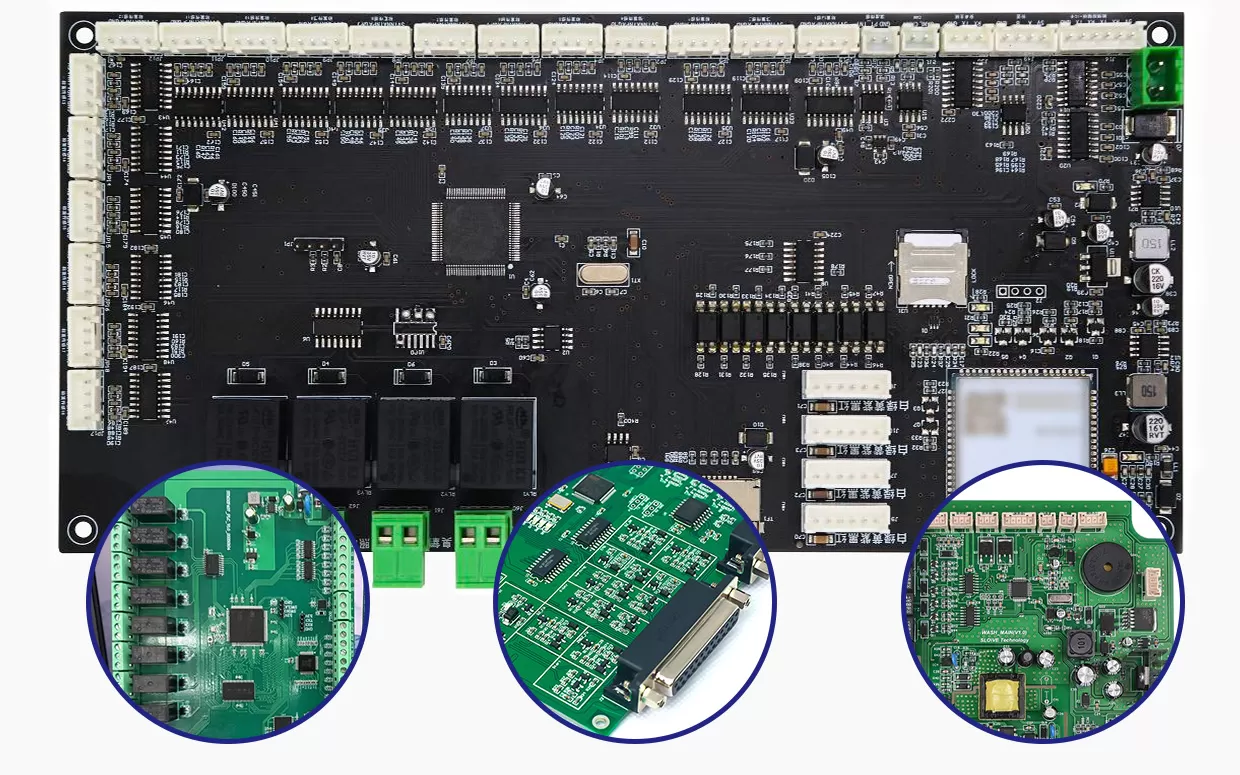
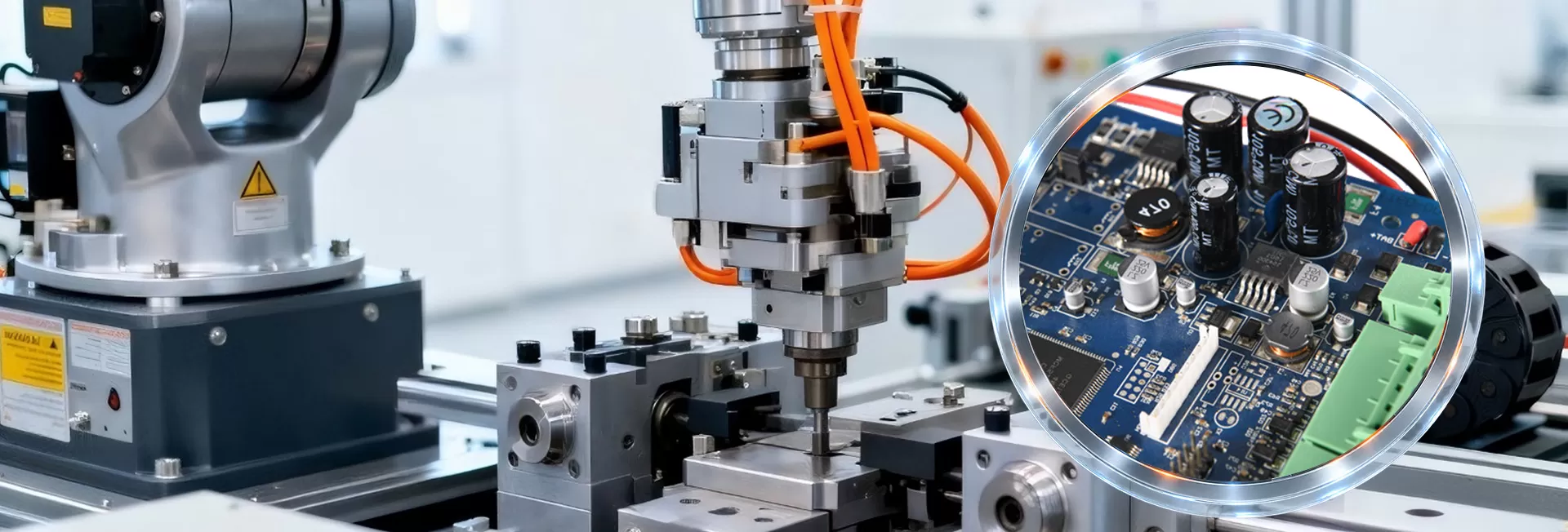
As the heart of an electronic system, an industrial control PCB used in applications such as PLC controllers, industrial gateways, I/O expansion modules, motor control boards, sensor acquisition boards, and industrial power control boards is designed to support long-term stable operation, interference immunity, power supply reliability, robust interface connections, and ease of on-site maintenance.
Core Components for Industrial Control PCB: An industrial control application PCB commonly includes MCUs, industrial communication ICs, isolation devices, PMICs (Power Management ICs), operational amplifiers, ADCs/DACs, relay drivers, terminal blocks, and connectors.
MCUs, industrial communication ICs, isolation devices, PMICs (Power Management ICs), operational amplifiers, ADCs/DACs, relay drivers, terminal blocks, and connectors.
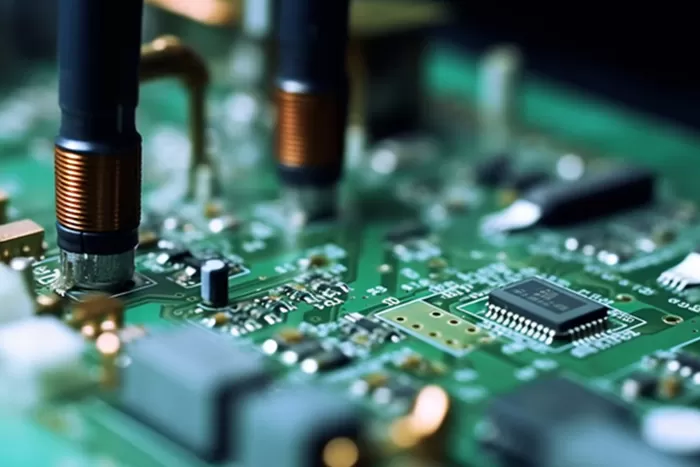
Industrial control PCB assemblies widely use packaging formats such as QFP, QFN, SOP, SSOP, TSSOP, SOT, DFN, LGA, DPAK, as well as various through-hole devices (THD).
Factors such as component pin spacing, pad layout and part height can easily fly under the radar, yet they can directly cause issues throughout printing, soldering, inspection and coating processes.
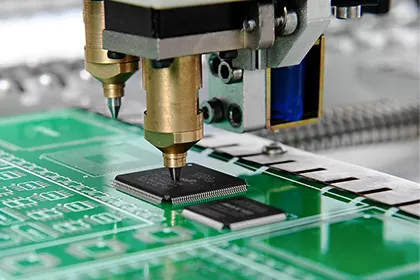
KnownPCBA delves into the manufacturing techniques required for industrial control application PCB assembly .
Start a simple and comfortable industrial control PCB assembly project. The KnownPCBA team helps bring your hardware concept to production with a full suite of turnkey PCBA services, including PCB prototyping, SMT placement, BOM kitting, component sourcing, through-hole soldering, testing, and low-volume PCBA assembly, seamlessly bridging the gap from engineering prototypes to low-volume production validation.
For Bottom-Terminated Components (BTCs) such as QFN, DFN, and LGA packages, we exercise stringent control over stencil aperture design, solder paste volume, and reflow profiles. Consequently, the risks of cold solder joints, excessive voiding, and assembly defects are minimized.
To further reduce risk, the priority shifts to complete solder wetting, strong mechanical support, and consistent component orientation, all of which contribute to secure interfaces and reliable long-term operation in harsh industrial environments.
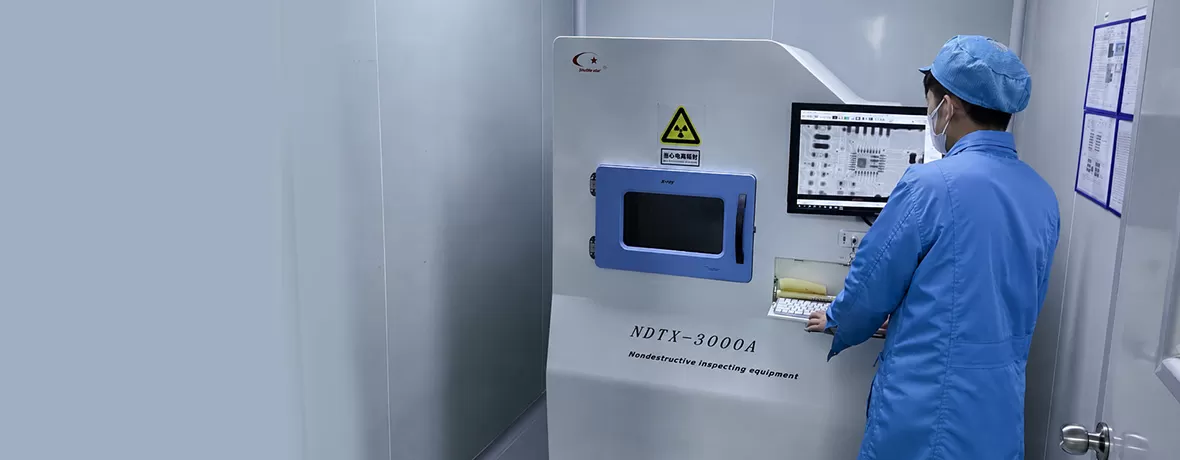
No matter how complex your industrial automation layout becomes or how tight the schedule is, your industrial control PCBs are treated with IPC-A-610 Class 3 precision at KnownPCBA. Advanced optical inspection (AOI) and X-ray testing are fully leveraged to help safeguard every solder joint.
Let us handle the prototyping and mass-production manufacturing bottlenecks while your industrial control application team stays focused on pioneering the next generation of industrial control systems.
Proven by 7 industries, 4000+ customer projects
Please contact us at sales@knownpcb.com, ask for engineering support here or use the form below to reach out to KnownPCB | Get In Touch Today |